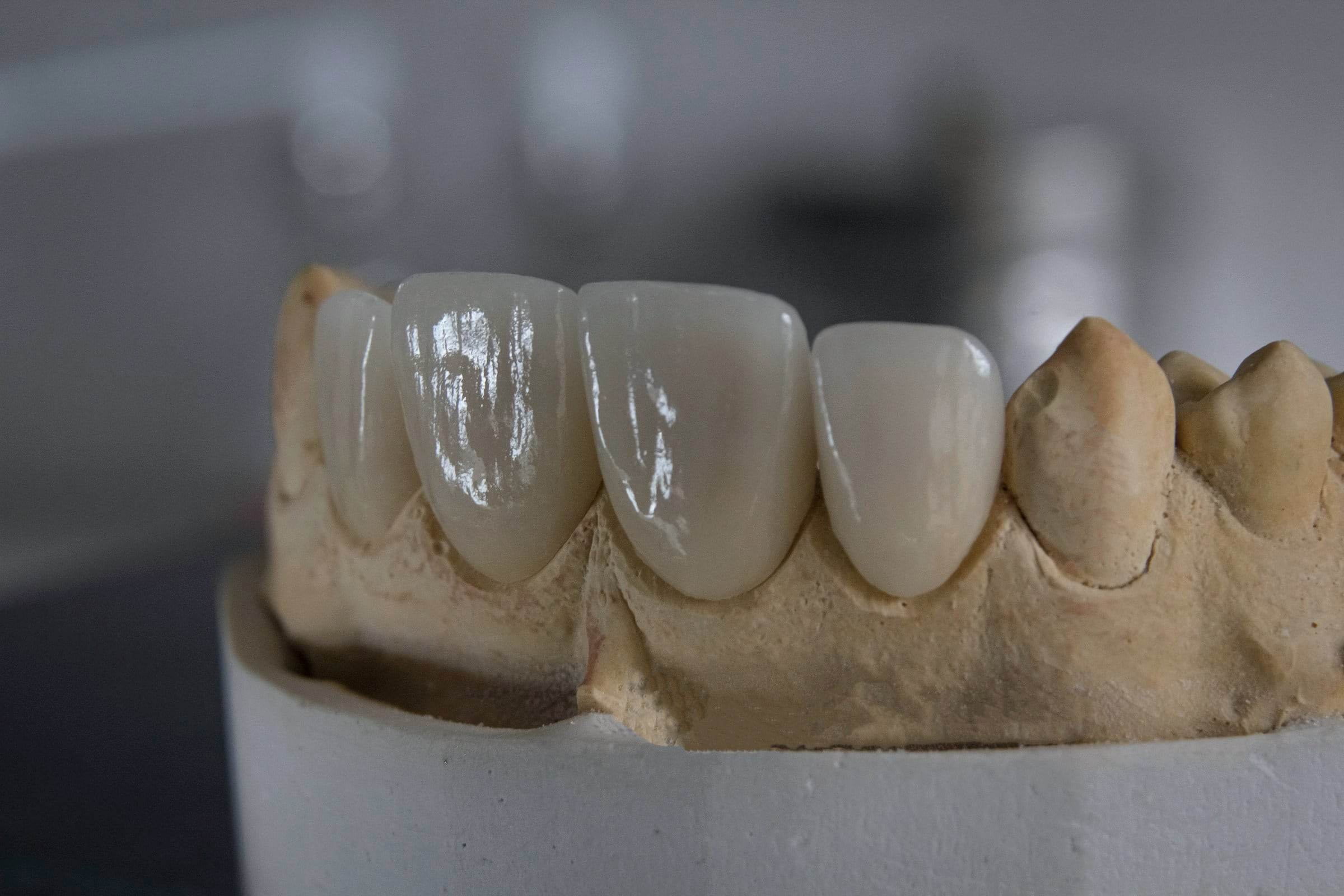
When a crown makes sense
- After root canal treatment on a back tooth
- A tooth with a very large filling that keeps breaking
- A cracked tooth that needs holding together
- A badly worn or broken tooth
When a bridge makes sense
A conventional fixed bridge can replace a gap of one tooth, and sometimes two, when the supporting teeth and gums are suitable. It involves reshaping the teeth on either side of the gap.
Caring for crowns and bridges
Brush as normal, paying attention to where the crown meets the gum. Under a bridge you’ll need a floss threader or a small interdental brush to clean beneath the replacement tooth. We’ll show you how at the fitting.
What happens, visit by visit
-
Step 1: Preparing the tooth
The tooth is numbed and reshaped to make room for the crown. For a bridge, the teeth on either side of the gap are prepared.
-
Step 2: Impression and shade
We take an impression of your teeth and choose the shade with you in daylight, against your neighbouring teeth.
-
Step 3: Temporary crown
You wear a temporary crown while the laboratory makes the permanent one, usually for one to two weeks.
-
Step 4: Fitting
We check the fit, bite and colour before cementing it. If anything isn’t right, it goes back to the laboratory.
Cost
Crowns are priced per tooth and bridges per unit. A three-unit bridge replaces one missing tooth and uses the two neighbouring teeth for support. The price also depends on the material, laboratory work and complexity.
| Treatment | Price |
|---|---|
| Crown, per tooth Depends on the material. | At consultation from Rs XX,XXX |
| Bridge, per unit | At consultation from Rs XX,XXX |
You’ll get a written estimate for your own treatment before anything starts. All fees and how to pay
Questions
Porcelain fused to metal, or zirconia?
Porcelain fused to metal is strong, proven and costs less, though a thin dark line can sometimes show at the gum over the years. Zirconia is metal-free and strong, but its appearance depends on the material, shade, tooth and laboratory work. For back teeth, the suitable material depends on the tooth and the amount of structure remaining.
How long does a crown last?
Often ten years or more, sometimes much longer. The main risks are decay at the edge where the crown meets the tooth, and grinding. Cleaning well along the gum line matters most.
What if I don’t want a bridge?
A conventional fixed bridge involves reshaping the teeth on either side of the gap. A partial denture fills the gap without touching them, and costs less. Implants are another option; if you’d like one, we’ll refer you to a specialist who places them.
Will people be able to tell?
For front teeth, the shade is matched against the neighbouring teeth before the crown is fitted.
Awaiting clinical review by Dr Hamza Akhlaq.
