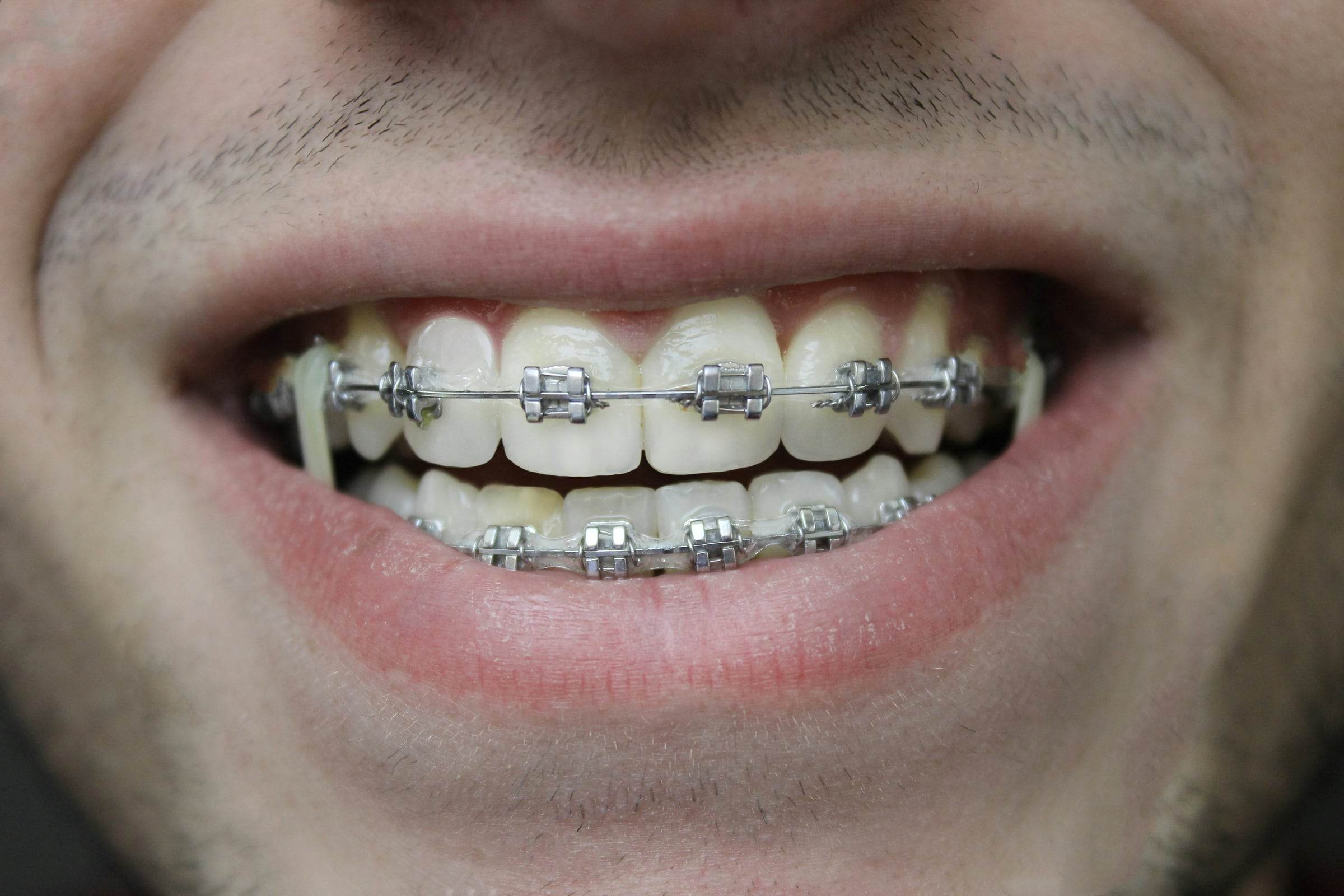
Why straighten teeth
- Crowded teeth can be harder to clean properly, which can make plaque build-up more likely.
- Some bites put extra force on particular teeth and wear them down.
- Many people simply want to be happier with their smile, which is a perfectly good reason.
Fixed braces
Brackets and wires remain on the teeth throughout treatment. They can treat a wide range of alignment and bite problems and do not need to be removed for meals.
Clear aligners
Clear aligners are a series of removable transparent trays that gradually move the teeth. They need to be worn for most of the day and removed for eating, drinking anything other than water and brushing. Not every case is suitable for aligners.
Looking after your teeth during treatment
- Brush carefully around every bracket. Small interdental brushes make it easier.
- Avoid hard and sticky food, such as nuts, ice, hard sweets and chewing gum, which can break brackets off.
- With aligners, brush before putting them back in, wear them for the prescribed amount of time and drink only water while wearing them.
What happens, visit by visit
-
Step 1: Assessment
We examine your teeth, gums and bite. Photographs, X-rays or scans may be needed to plan treatment.
-
Step 2: Your plan
We discuss whether fixed braces or clear aligners are suitable, how long treatment is expected to take and whether any other dental work is needed first.
-
Step 3: Fitting
For braces, brackets are bonded to the teeth and the wire is placed. For aligners, the first set of trays is fitted and instructions are given.
-
Step 4: Regular checks
Braces are adjusted at follow-up appointments. With aligners, new sets of trays are provided and progress is checked.
-
Step 5: Retainers
Once the teeth are straight, retainers hold them there. Teeth naturally try to move back, so this stage matters as much as the braces.
Cost
The total cost depends on the treatment method, the expected length of treatment and the visits required. Confirm the fee and what it includes at your consultation.
| Treatment | Price |
|---|---|
| Fixed braces, full treatment | At consultation from Rs XXX,XXX |
| Clear aligners, full treatment | At consultation from Rs XXX,XXX |
| Consultation and examination Initial consultation and examination. | Rs 500 |
You’ll get a written estimate for your own treatment before anything starts. All fees and how to pay
Questions
Are braces better than clear aligners?
Neither is automatically better. Fixed braces can treat a wider range of cases, while aligners are less visible and removable. The suitable option depends on the teeth and bite.
How long does treatment take?
Many cases take around 12–24 months, but the actual time depends on the amount of movement needed and how treatment progresses.
Do braces hurt?
Teeth can feel sore for a few days after braces are fitted or adjusted. This usually settles without treatment.
Can adults have braces?
Yes. Adults can have orthodontic treatment if their teeth and gums are healthy enough for it.
Will my teeth move again after treatment?
Teeth can shift after orthodontic treatment. Retainers are used to reduce this movement and usually need to be worn long term according to the orthodontic plan.
Are clear aligners suitable for everyone?
No. Suitability depends on the position of the teeth, the bite and the health of the teeth and gums. Fixed braces may be more suitable for some movements.
What happens if a bracket breaks?
Contact the clinic for advice. Avoid hard or sticky foods and do not pull the bracket off yourself.
Will I need teeth removed?
Some cases need space created by removing teeth, but many do not. Dr Hamza will assess your teeth and bite and explain if an extraction is being considered.
Awaiting clinical review by Dr Hamza Akhlaq.
